 Naven
Naven
There are three ways to keep watch over a child's messages, and they are not equally useful.
Read everything. A monitoring app copies messages to the parent, or the parent picks up the phone. It works until the child notices, and then the conversations that matter move somewhere the parent cannot see.
See the shape of the activity. Snapchat's Family Center shows a linked parent who their teen messaged in the last seven days. Discord's Family Center shows activity such as who they talk to and how much. Neither shows what was said.
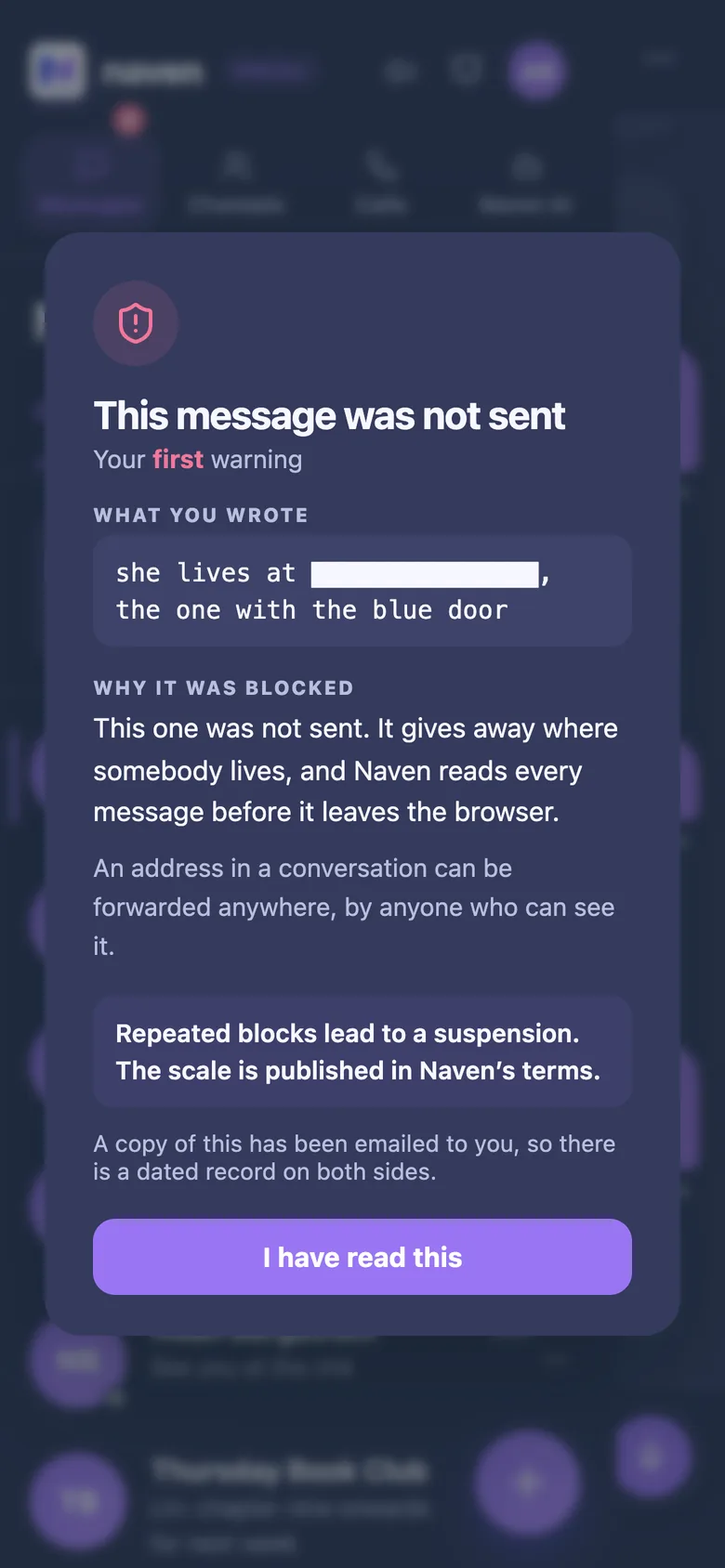
Stop the harmful messages, and say how often. Naven reads every message before it is delivered, refuses the ones that fall into twelve published categories, and tells a parent which categories were stopped — without showing the message.
What Naven's parent controls show
- Who your child talks to, and when.
- How long they use Naven.
- Which safety categories were stopped: for example harassment, a scam link, or somebody's address.
- Never what anybody wrote, and never a contact's email address.
The controls sit behind a PIN, on a page Naven emails to the parent or inside Naven for a parent signed in with the address the child named. From there a parent can pause the account or delete it. An account for a child under 13 cannot send anything until a parent's consent is verified.
Agree the rules before you need them
- Tell your child what you can see and what you cannot. Watching that is explained is a different thing from watching that is discovered.
- Make blocking and reporting their first move, and show them where those buttons are.
- Agree that telling you about something that went wrong will not cost them the phone. A child who expects punishment for reporting stops reporting.
- Revisit it as they get older. What fits a ten-year-old does not fit a fifteen-year-old.
When something is seriously wrong
If you have a specific, serious worry — somebody pressuring your child for pictures, threats, or an adult they met online asking them to keep a secret — that is no longer a question of monitoring. Talk to your child, keep the evidence, report the account to the app, and, if a child may be in danger, contact the police. In the United States, sexual exploitation of a child can be reported to the NCMEC CyberTipline at report.cybertip.org; in the United Kingdom, to CEOP at ceop.police.uk.
What this approach cannot do
- Naven's screen is automated software. It misses things, including obvious ones, and it is weaker in languages other than English.
- Calls are not screened.
- It covers Naven only, not the other apps on the device.
- Naven is not a child-safety product, and promises no safety, privacy or security.
More questions
Can I read my child's messages on Naven?
No. The parent controls show who your child talks to, when, how long they use Naven and which safety categories were stopped, never what anybody wrote.
Are monitoring apps a bad idea?
They show a parent more, and they also change what a child does: a child who knows every message is read often moves to an app the parent does not know about. If you use one, tell your child.
Do other messaging apps show parents who their child talks to?
Some do. Snapchat's Family Center shows who a linked teen messaged in the last seven days, and Discord's Family Center shows activity such as who they talk to. Neither shows message content, and neither stops a message before it is delivered.