 Naven
Naven
Online grooming is when somebody, usually an adult, builds a relationship with a child in order to abuse or exploit them. It rarely starts with anything that looks harmful. It starts with attention: compliments, shared interests, gifts or game currency, and the sense of being understood.
The pattern that follows is consistent enough to recognise: moving the conversation somewhere more private, asking the child to keep it secret, testing boundaries with jokes or questions about their body or relationships, and, later, asking for pictures or to meet.
What helps: children who know that an adult asking them to keep a secret is a warning sign, who can block and report without asking permission, and who know that telling a parent will not get them into trouble.
Where Naven stands
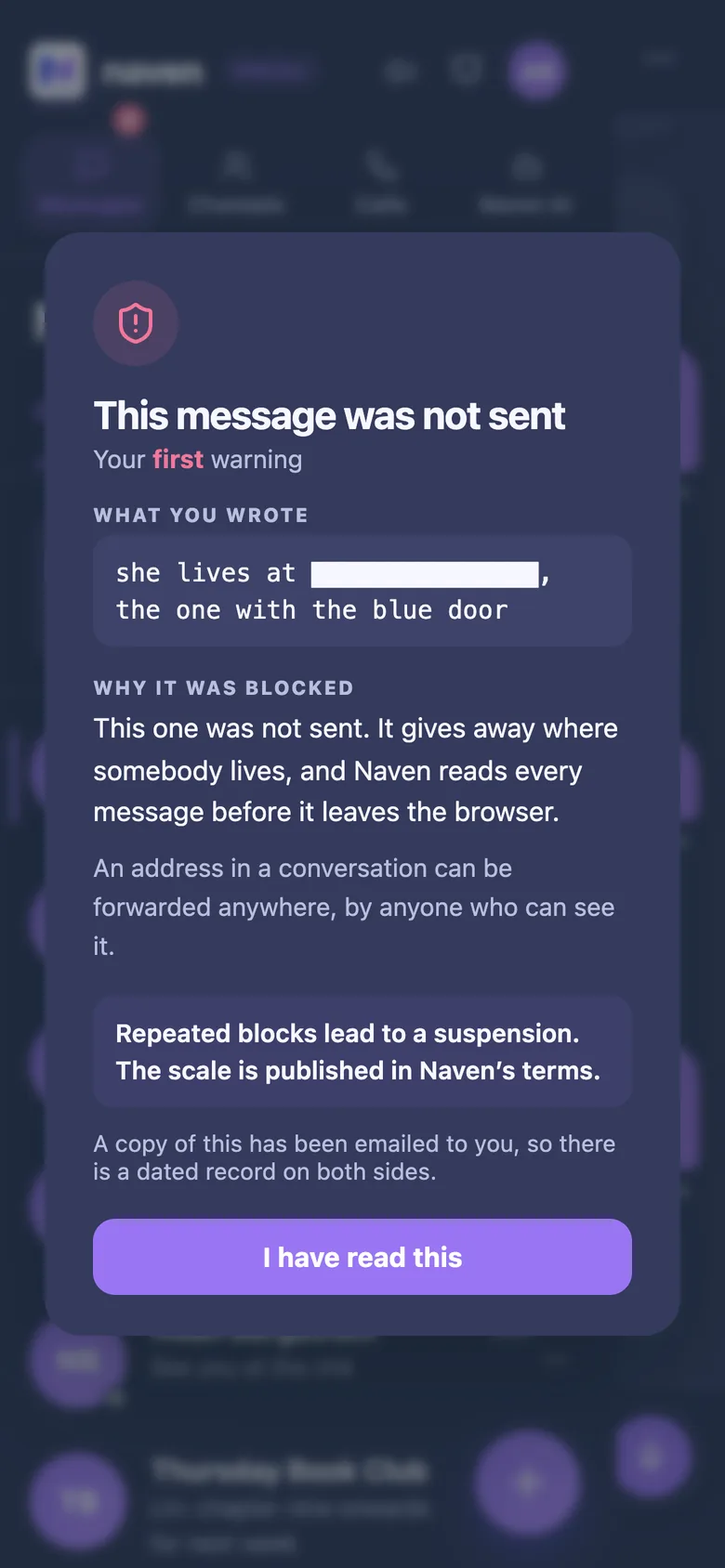
Under-13 and teen accounts are screened for patterns associated with grooming, on top of the categories every account is screened for, and the rule-based layer that runs on every message includes known grooming phrasing. Sexual solicitation, or anything sexual involving a minor, suspends an account on the first instance. Naven publishes no member directory, so a stranger cannot browse their way to a child. None of this is a guarantee: the screen is automated, and it misses things.