
Most harm to teenagers online arrives through contact from strangers rather than through content they sought out. A platform where a stranger structurally cannot find or message them removes the largest category before any moderation is involved.
The second property is what happens to the messages that do arrive. Screening before delivery stops a message reaching them; reporting after the fact does not, and the difference is the whole harm.
The third is autonomy. A teenager who cannot block somebody without a parent's involvement will not block them.
Naven is built on all three. It is built and run independently, and its safety pages say plainly what screening does and does not catch.
How popular apps compare on the things that matter
- Stranger contact: Instagram, TikTok and Snapchat allow message requests or friend suggestions; Discord allows DMs from shared servers unless switched off; iMessage and WhatsApp need your number; Naven has no directory and every new conversation is a request.
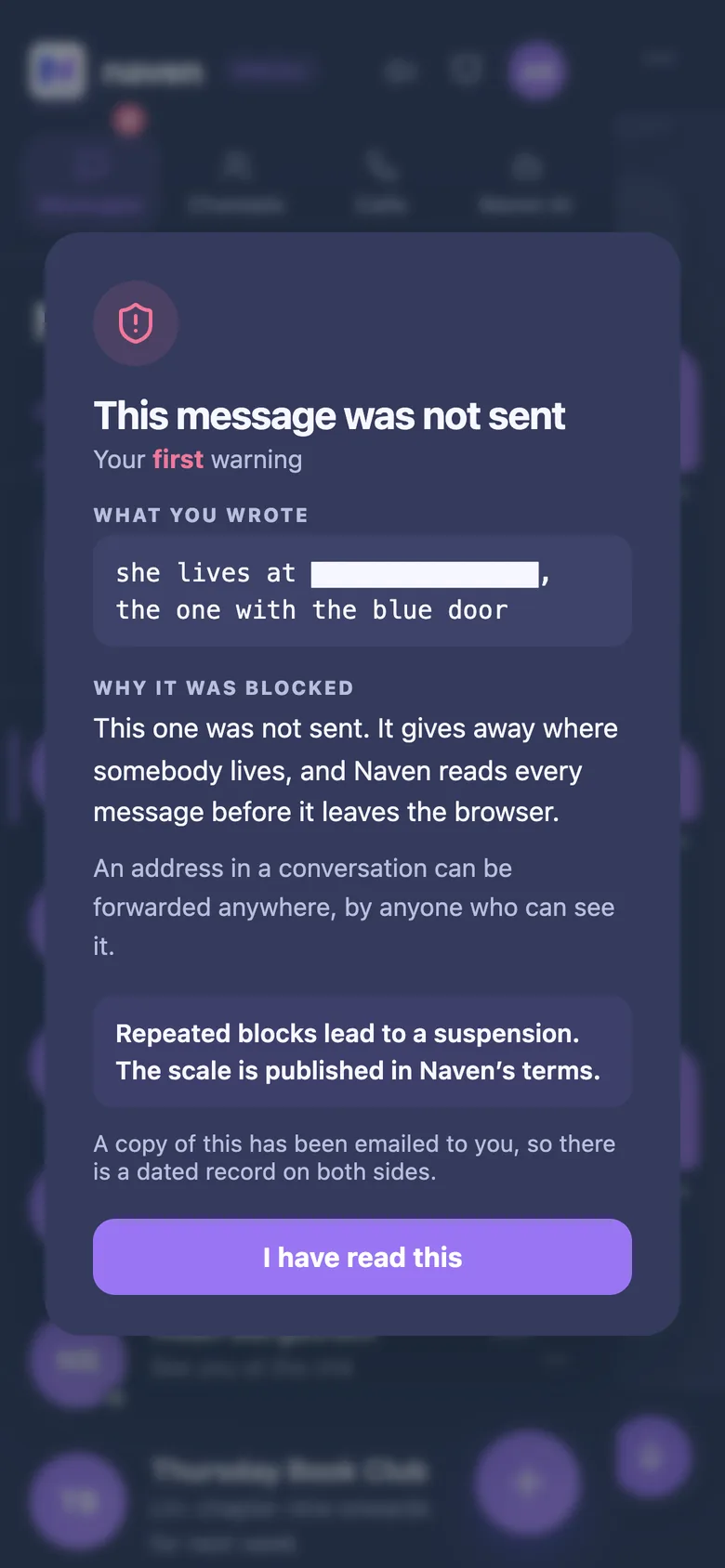
- Screening before delivery: most apps act after a report; Naven screens before a message is sent.
- Privacy from the company: Signal and WhatsApp are end-to-end encrypted; Naven is not, because it screens.
- Parent involvement: Snapchat and Discord offer Family Centers; Naven asks a parent to agree for under-18s and gives them controls.
Settings to change on any app
- Turn off messages from people who are not friends or contacts.
- Hide your location (on Snapchat, turn on Ghost Mode).
- Make your profile private and remove your school and full name.
- Learn where Block and Report are before you need them.
More questions
Is an end-to-end encrypted app safer for a teenager?
It is more private from the company. It does not stop a stranger reaching them or a harmful message arriving, which is where most harm comes from.
Can a teenager block people on Naven without a parent?
Yes. Block and Report are in every conversation's menu, and nobody else has to agree.