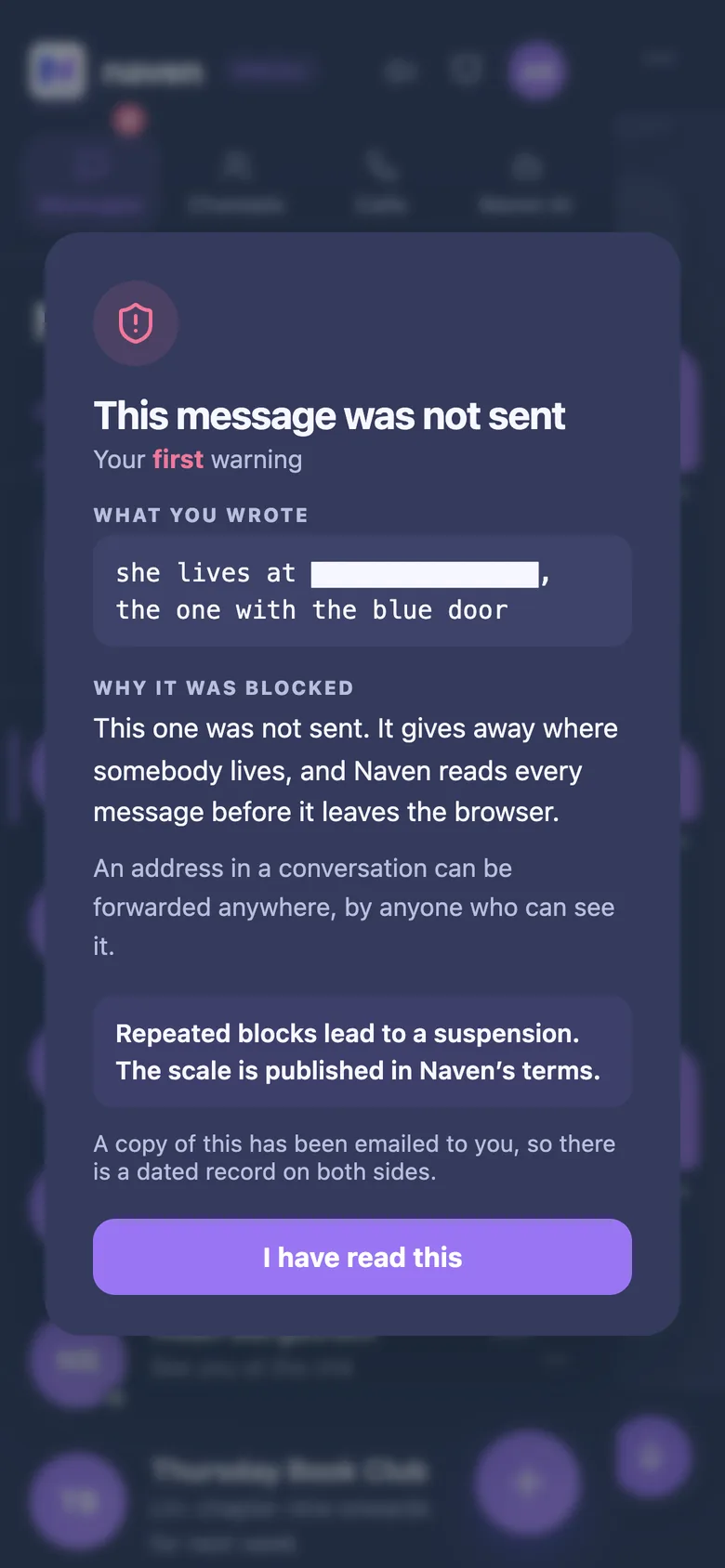
Content moderation is how a platform decides what it will carry and enforces that decision. It covers the written rules, the tools that find content breaking them, the people or systems that make the call, and what happens to an account that breaks them repeatedly.
Platforms moderate in three broad ways. Reactive moderation waits for reports: a user flags something, and a person or a model reviews it. Proactive moderation scans content as it is posted, usually with automated classifiers, and removes or hides what breaks the rules. Community moderation hands the job to volunteers, such as Reddit's moderators or Discord's server admins, who enforce their own rules on top of the platform's.
Each has blind spots. Reactive moderation is slow and depends on somebody being willing to report. Proactive moderation is fast but makes mistakes at scale. Community moderation varies enormously from one community to the next. Most large platforms combine all three.
What separates good moderation from bad is mostly transparency: rules written in plain language, a stated reason for each action, consistent penalties that escalate predictably, and a working way to challenge a mistake.
Where Naven stands
Naven publishes its categories, screens messages before delivery rather than after a report, and also reads reports from members. An automated review re-examines refusals and withdraws the ones that do not hold up against the policy. Naven makes no promise that moderation catches everything.