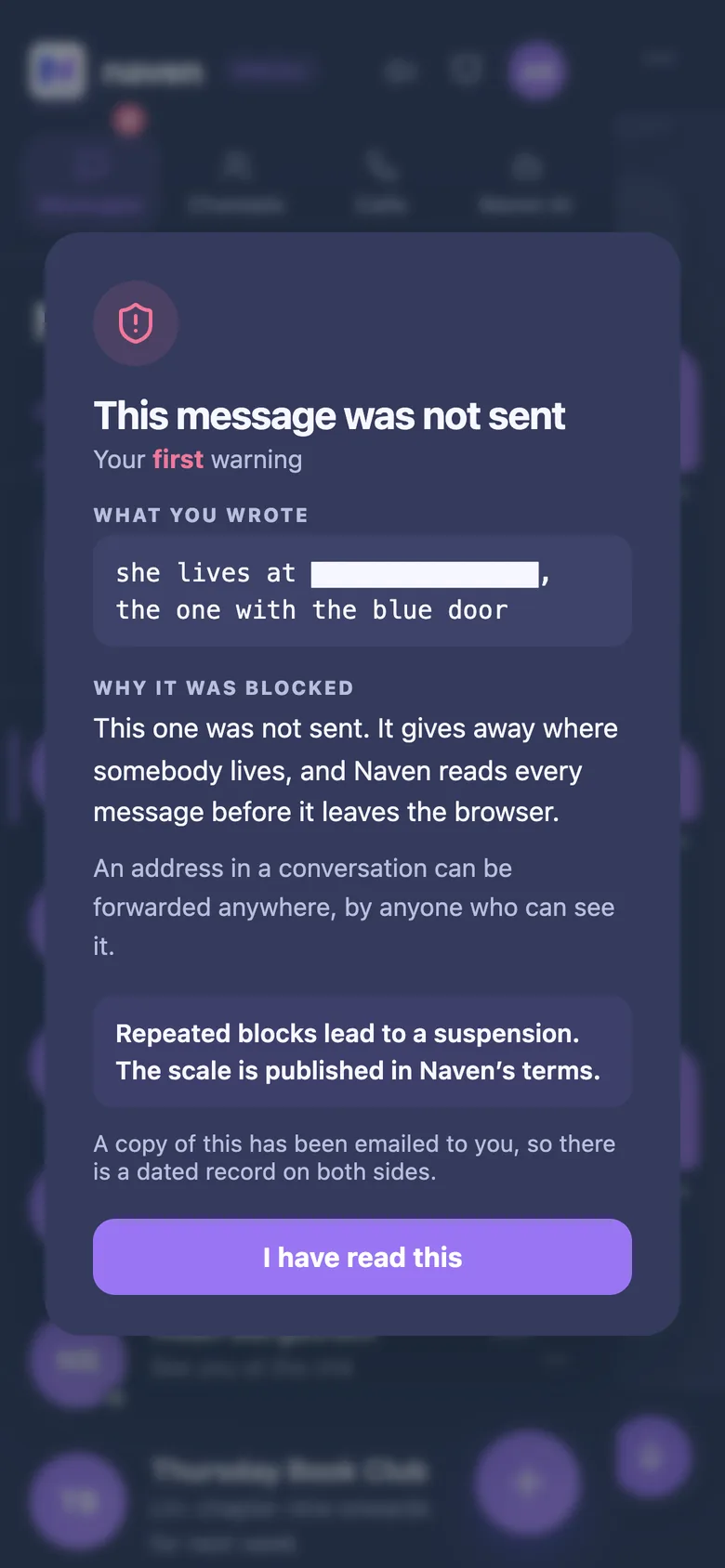
A false positive is a message the screen refused that it should have allowed. The opposite, a false negative, is a message it should have refused and let through. Every automated screen produces both, and tuning it is a choice about which mistake to make more often.
False positives come from context the screen missed. "I'm going to kill it at this exam" is not a threat. A slur quoted in order to report it is not the same as using it. A medical question can look like sexual content to a crude filter. Names, place names and words in other languages trip keyword lists. Screens built on language models handle context much better than keyword lists, but still stumble over irony, in-jokes and slang.
Why false positives matter. A refused message is frustrating, but a false positive that also counts toward a suspension is worse: somebody can be penalised for a rule they did not break. That is why a fair system either reviews its refusals, lets people challenge them easily, or keeps penalties for the categories it is most sure about.
If a screen refuses something that was fine, the best thing to do is usually to rephrase, and to report the mistake so the rules can be improved.
Where Naven stands
Naven re-examines refusals automatically with a separate review against the published policy, and withdraws those that do not hold up. Only serious categories count toward a pause on sending; swearing, for example, is refused where the rules say so, and that is all.